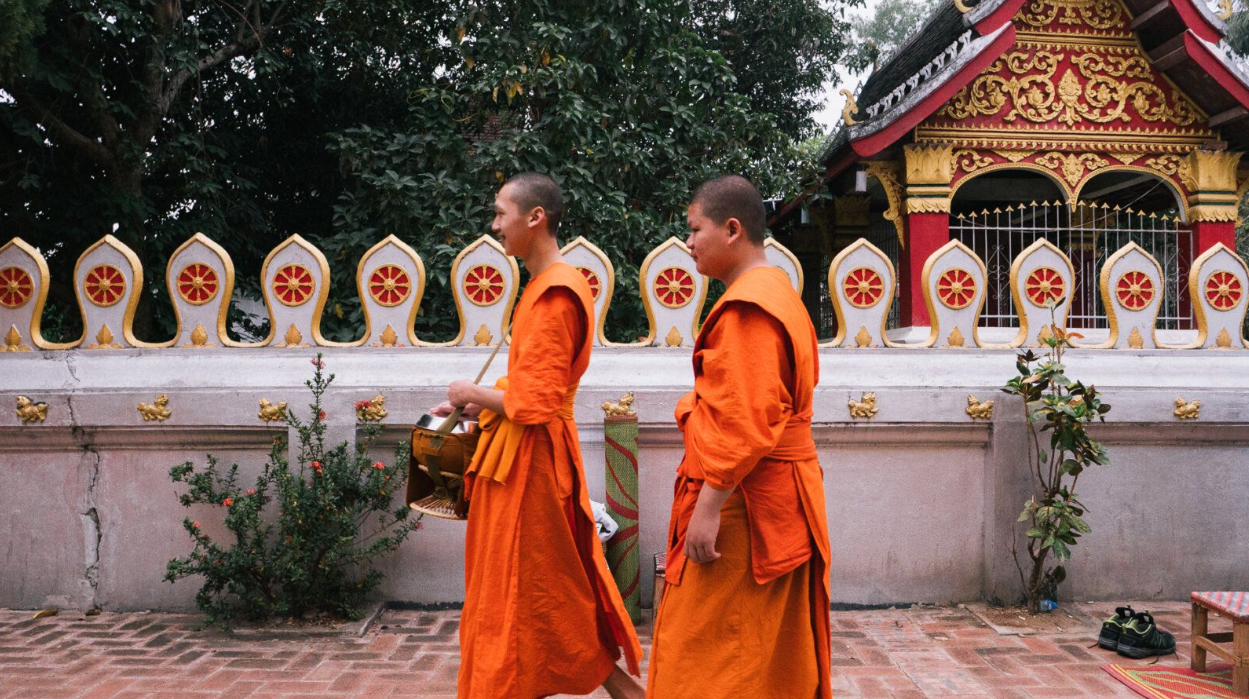

Buddhism holds a significant place in Laos and is widely regarded as the national religion. One of the most recognizable aspects of Buddhist practice in Laos is the presence of monks dressed in vibrant orange robes. These monks can be seen throughout the country, whether in temples, participating in ceremonies, or simply going about their daily routines.
For many Lao men, entering the monkhood is an important spiritual and cultural experience. Some choose ordination as a way to deepen their understanding of Buddhism, while others see it as an important rite of passage and a way to serve their community. Ordination may be temporary or lifelong, depending on the individual.
A Day in the Life of a Monk
A monk's day typically begins before sunrise with prayer, chanting, and meditation. In many communities, monks then participate in alms rounds, receiving food offered by local residents.
The rest of the day may include studying Buddhist teachings, maintaining the monastery, helping with communal activities, and practicing meditation. Even ordinary tasks such as sweeping temple grounds can become opportunities to practice mindfulness and discipline.
Monks generally follow a structured lifestyle, including rules around possessions, food, celibacy, ethical conduct, and non-violence. These principles are rooted in the Vinaya, the traditional framework of Buddhist monastic discipline.
The Meaning Behind the Robe
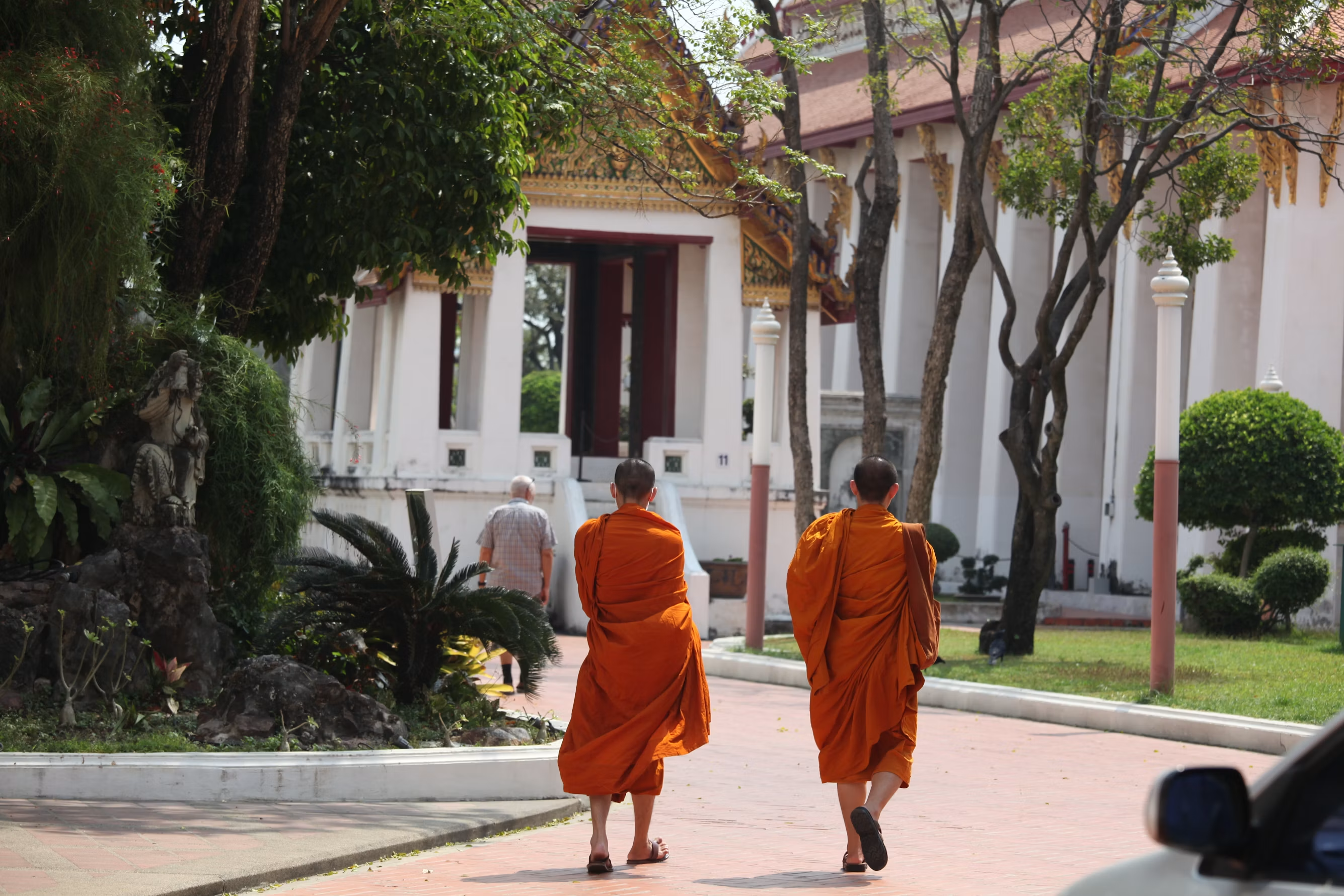
The simple robe is an important symbol of Buddhist monastic life. Theravada monks commonly wear shades of saffron, ochre, orange, or brown, although colors vary by region and tradition.
The robe's simplicity reflects the Buddhist practice of renunciation and the rejection of excessive attachment to material possessions.
The way a robe is draped can also vary depending on local customs, ceremonies, and occasions. While visitors may notice differences between monks, robe color or style should not automatically be interpreted as a ranking system. Traditions differ between Buddhist communities.
Why Do Men Join Monkhood?
For many Lao men, joining the monkhood is a profound spiritual journey. Some choose to become monks to cleanse themselves of past misdeeds, believing that this act helps to purify their karma from previous lives. Others take this step as part of a cultural tradition, marking their transition into adulthood. In this sense, becoming a monk can be seen as both a rite of passage and an opportunity for spiritual growth.
For many Lao and Southeast Asian families, having a son enter the monkhood is considered both an honor and a duty. It is viewed as a privilege for a young man to be ordained, even if just temporarily, and to be immersed in Buddhist teachings and practices. This experience allows them to gain a deeper understanding of life, mindfulness, and the values that Buddhism embodies.
References
- [1] [Gombrich, R. (2006). "Theravada Buddhism: A Social History from Ancient Benares to Modern Colombo." Journal of Buddhist Studies. https://www.jstor.org/stable/40871254]
- [2] [Swearer, D. K. (1995). "The Buddhist World of Southeast Asia." Religious Studies Review, 21(3), 203-215. https://www.jstor.org/stable/45355434]
- [3] [Zahab, R. (2010). "Robe and Ritual: The Significance of Monastic Dress in Buddhism." Asian Ethnology Journal, 69(1), 78-94. https://www.jstor.org/stable/26234567]
- [4] [Matsumoto, K. (2012). "Color and Hierarchy in Buddhist Monastic Life." Asian Cultural Studies, 29(2), 140-157. https://www.jstor.org/stable/10.2307/44032109]
Join our private community for Lao learners
Connect with Lao learners from around the world and keep your Lao alive. LES Community offers weekly speaking sessions, personal feedback from Ginie, and a full resource library.