
Everyone learns ຂອບໃຈ khobjai. It's usually the second or third thing a visitor picks up, right after ສະບາຍດີ sabaidee. In this blog let's look at the different ways you can thank someone, how to reply, and what to do with your hands.
And the bit that catches most of my students out: in Lao families we don't say thank you nearly as much as you'd expect.
The two you'll use most
- Thank you (standard) - ຂອບໃຈ khobjai
- Thank you (casual, warm) - ຂອບໃຈເດີ khobjai der
ຂອບໃຈເດີ khobjai der is the one you'll use most, so if you take one thing from this blog, take that. ເດີ der is what makes it friendly rather than a plain thank you.
When ຂອບໃຈ khobjai isn't enough
- Thank you very much - ຂອບໃຈຫຼາຍໆ(ເດີ) khobjai laai2 (der)
- Thank you (polite, to someone you don't know well) - ຂອບໃຈເຈົ້າ khobjai jao
- Thank you (formal, for elders, monks, priests) - ຂອບພະຄຸນ khob-phakhoon
ຫຼາຍ laai means a lot, and ໆ is a repetition mark, so you say the word before it twice. There's no exact rule on when to use it, it's just something we do when we're feeling it 😅
The last two are more about respect. ເຈົ້າ jao is the polite particle, so it lifts ຂອບໃຈ khobjai a level without being formal.
Thanking for something
- Thanks for... - ຂອບໃຈສຳລັບ... khobjai samlab...
- Thanks for the meal - ຂອບໃຈສຳລັບອາຫານ khobjai samlab ahaan
- Thanks for everything - ຂອບໃຈສຳລັບທຸກຢ່າງ khobjai samlab thook yaang
And for something someone did:
- Thanks for doing something - ຂອບໃຈທີ່... khobjai thee...
- Thanks for helping - ຂອບໃຈທີ່ຊ່ວຍ khobjai thee sooai
- Thanks for waiting - ຂອບໃຈທີ່ຖ້າ khobjai thee thaa
ສຳລັບ samlab goes before a noun, ທີ່ thee goes before a verb. Once you've got that, you can build these yourself.
How to reply
- It's nothing, you're welcome - ບໍ່ເປັນຫຍັງ boh pen nyang
- It's nothing, don't worry about it - ບໍ່ເປັນຫຍັງ, ບໍ່ຕ້ອງເປັນຫ່ວງ boh pen nyang, boh tohng pen hooang
- No need to thank me - ບໍ່ຕ້ອງຂອບໃຈ boh tohng khobjai
ບໍ່ເປັນຫຍັງ boh pen nyang is the one you'll hear most. Thank yous, sorrys, anything really. We're pretty chill about most things 🙈
What to do with your hands
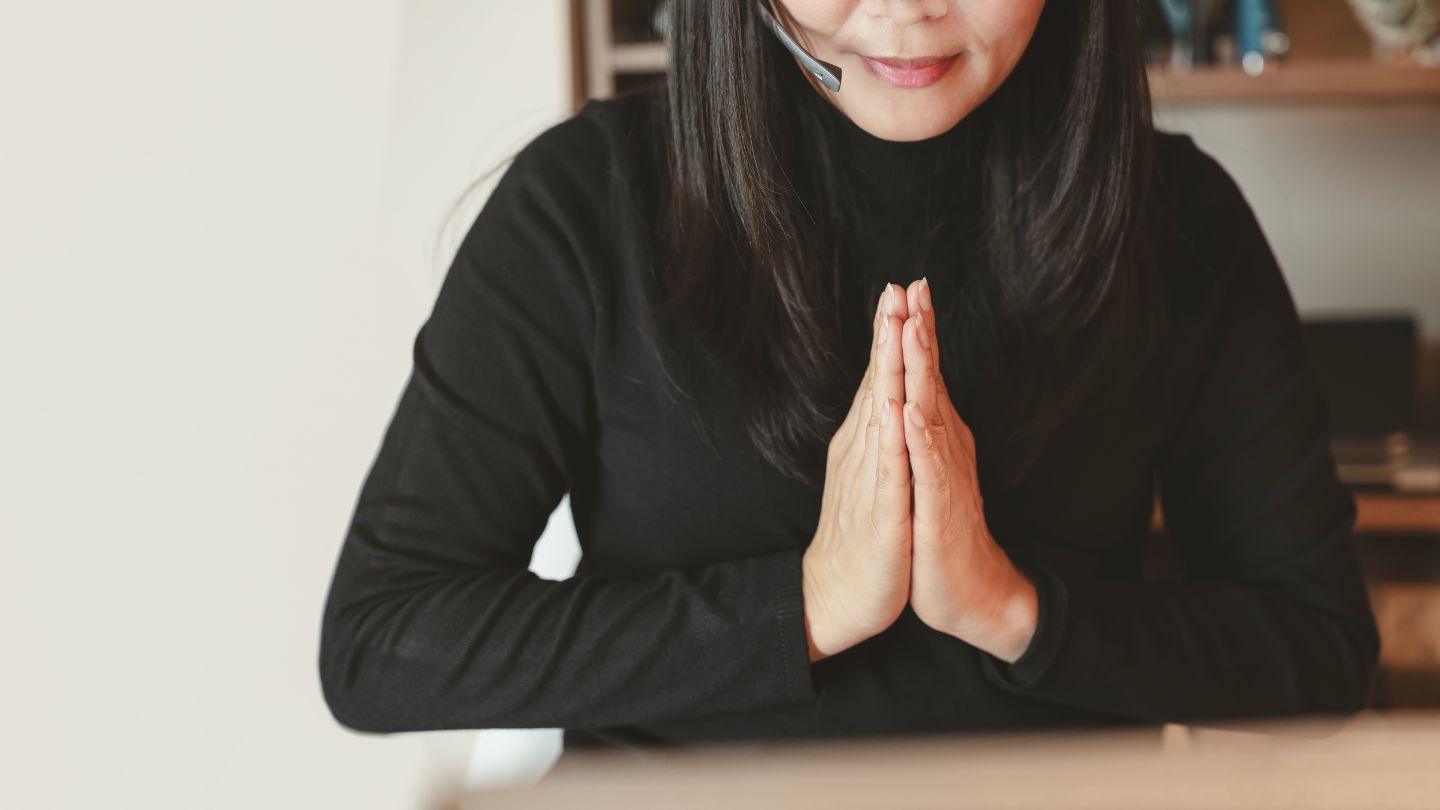
The ນົບ nob is when you greet and thank in Lao:
- Put your hands together, fingers and palms touching, at chest level
- Relax your arms and shoulders
- Slightly bow your head
Everyone starts at chest level, then raises depending on who's in front of you. Chest level for friends and everyday situations, higher for elders, highest for monks.
If you're unsure, watch what the person in front of you does and match it. Going too high is more noticeable than going too low, so keep it lower if in doubt. Nobody would expect you to get it right first time, and the fact you tried counts for far more than the angle.
The bit nobody tells you
In Lao families we don't say ຂອບໃຈ khobjai nearly as often as English speakers say thank you.
We do say something, it's just not thank you: ມາເດີ ມາກິນເຂົ້າ maa der maa kin khao (come let's eat), ບໍ່ເປັນຫຍັງ boh pen nyang (no worries). Making sure you've eaten, cutting fruit and leaving it where you'll find it, doing the thing before you ask. That's what we'd say instead, our love language as Lao is different.
What I've noticed with my students is that it depends a lot on the family. The ones who've spent time in America, Europe or the UK have picked it up from those cultures, so you'll hear ຂອບໃຈ more often. In families still in Laos, much less. You could sit through a whole meal and not hear it once.
So keep ຂອບໃຈ khobjai for where it fits. Someone outside the family, someone who's gone out of their way, someone you don't know.
With the people closest to you, don't feel like you have to drop it. It's still good practice, and you could be the one who starts the trend in the family. Who wouldn't want to feel appreciated!
Get full access with audio
Every lesson comes with audio so you hear exactly how it sounds. Join weekly speaking sessions, get direct support from Ginie, and access everything LES Community has to offer.